Notes · Learning
23 October 2026 · BrainDash
A card is a picture, a label, and one fact
BrainDash is not a textbook split into screens. Every card is the same shape, so a child knows what to look at before they know the subject.
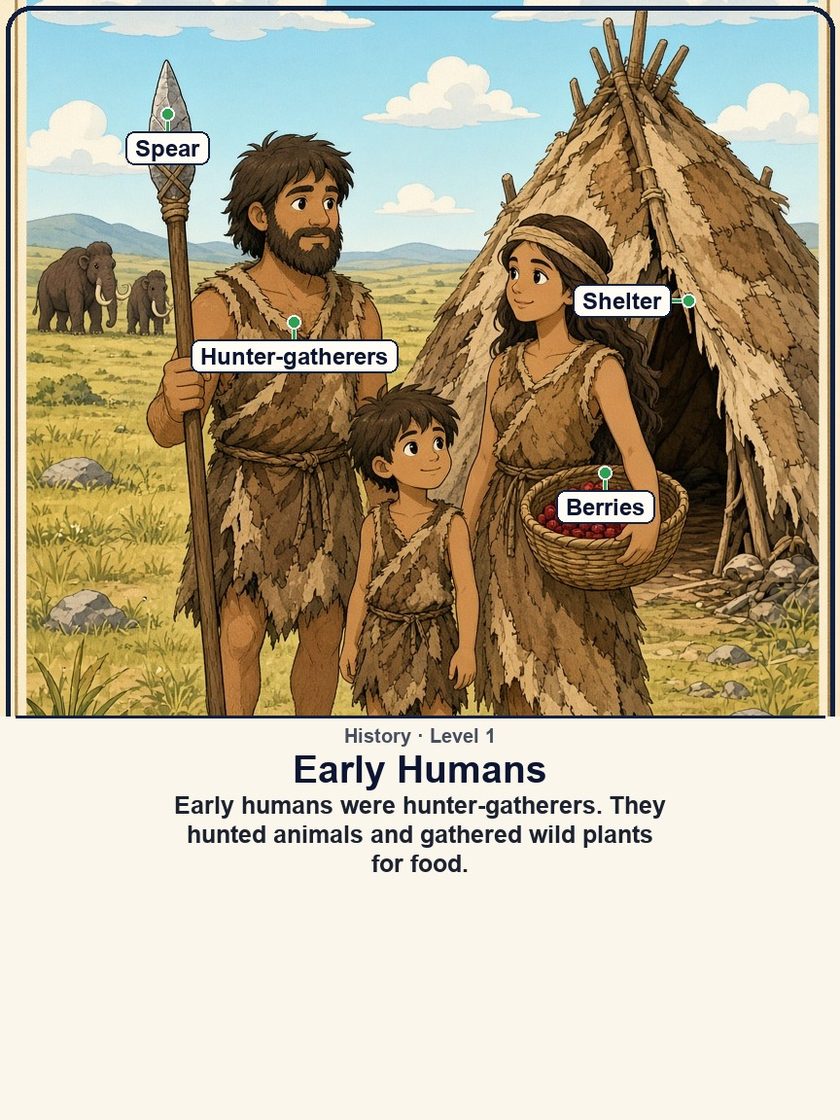
The picture carries the lesson. Labels name the things worth noticing: a spear, a shelter, a basket of berries. Under the picture there is one fact, a sentence, not a paragraph. Then a short question asks for something that was just on the card.
That shape is repeated across eleven subjects — history, science, space, geography, animals, nature, sports, mathematics, energy, economics and finance, and philosophy — with one hundred cards in each. The subjects change. The job of the screen does not.
The limit is deliberate. If the fact is longer than a child will read, the picture stops being the lesson and becomes decoration. If the question asks for something that was not labeled, the card was a trick. The work of making a card is cutting it down until the picture, the labels, and the question agree.
BrainDash is still in development. It is not on the store, and there is no public date.